US Approves Nvidia Sales to UAE: An Analysis of the G42 Deal and Its Geopolitical Implications
It’s a familiar ritual for anyone in this business. The pre-market hum, the first cup of coffee, and the routine check of the tickers that matter. You open a browser, type in the name of a company—in this case, one of the most scrutinized and algorithmically traded entities on the planet—and hit enter, expecting the usual firehose of data from a terminal like Bloomberg. You expect numbers, headlines, analyst ratings, maybe a pre-bell quote.
What you don’t expect is a wall. A clean, corporate, and utterly silent denial of access. Not an article you can’t read, but an apparent void where information itself is supposed to reside.
This isn’t a 404 error, the digital equivalent of a shrug. It’s a deliberate, constructed barrier. The screen is stark white, the corporate logo sitting impassively at the top, a quiet declaration that for you, right now, this stream of information has been turned off. For a data analyst, it’s the equivalent of a pilot looking down at a blank instrument panel mid-flight. The immediate question isn't just "What's the news?" but a far more unsettling one: "Why is there no news?"
The Signal in the Silence
In the world of finance, we operate on a fundamental assumption: that information, while not always perfect, is at least available. It can be parsed, debated, and modeled. But when a primary source of institutional-grade data simply goes dark on a specific, high-velocity subject, that assumption shatters. This creates an information vacuum, a condition far more dangerous than simply bad news.
Bad news can be priced. A disappointing earnings report, a regulatory hurdle, a supply chain disruption—these are all variables that can be fed into a model. An analyst can calculate the potential impact on revenue, margins, and future growth. It’s quantifiable. But a void? A void is pure, unquantifiable risk. It’s a black box. The market abhors a vacuum, and it rushes to fill it not with reasoned analysis, but with its most primal instincts: fear, speculation, and rumor.

I've run into these access blocks before, but a complete dead-end on a company of this magnitude feels... different. It’s not just an article behind a paywall; it’s the absence of the article’s very existence in a place it’s supposed to be. Is this a systemic technical failure on Bloomberg’s part? A regional block? Or something more targeted? The immediate "why" is almost secondary to the effect. The signal-to-noise ratio hasn't just dropped; the signal has been cut entirely, leaving nothing but the screech of static. What happens when the thousands—no, to be more exact, the millions of participants, from hedge funds to retail traders—are all suddenly staring into that same static?
When Narrative Becomes the Only Metric
Without a flow of verifiable data, the market is untethered from fundamentals. Price action becomes a self-fulfilling prophecy driven by nothing more than narrative momentum. Algorithms, programmed to react to news sentiment and keyword velocity, are left rudderless. They may interpret the silence as a negative event and trigger sell orders, or worse, they might find no signal at all and stand down, creating a liquidity mirage just when it's needed most.
This is where the real danger lies. Human traders, deprived of their analytical bedrock, fall back on guesswork. The chatter in trading forums and on social media becomes the de facto ticker tape. Every half-baked theory gains an outsized weight. (This isn't just about a single stock; it's a systemic vulnerability in how modern markets process information.) The absence of a story from a trusted source paradoxically allows a thousand unvetted, and likely untrue, stories to bloom.
It forces us to ask a deeply uncomfortable methodological question: what is the value of an analysis if the underlying data sources can be arbitrarily withdrawn without explanation? We build intricate models, stress-test assumptions, and back-test strategies, all predicated on the idea that the data pipeline is a utility—reliable, consistent, and impartial. But what if it’s not a utility? What if it’s a faucet that someone, somewhere, can turn off? How do you price a stock when you can't be sure your map of the world will even be there tomorrow?
Data Doesn't Just Disappear
Let's be precise. An information blackout of this nature, on a topic of this scale, is never a neutral event. It is, in itself, a powerful piece of data. It tells us that the systems we’ve built to ensure market transparency are more fragile and perhaps more centralized than we’d like to believe. The silence isn't an absence of a message; it is the message. And the message is that access to critical information remains a privilege, not a right—one that can be revoked. The greatest risk revealed here isn't whatever news we were prevented from reading. It’s the chilling realization that at any moment, for reasons unknown, the lights can simply be turned out.
Related Articles
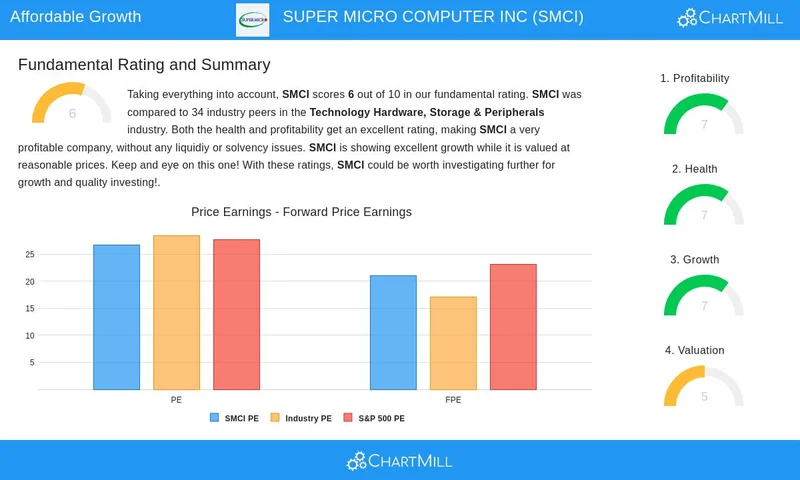
Super Micro's Stock Slide: What the Data Reveals About the Plunge and Its Outlook
It’s always the small tremors that precede the earthquake. For months, the market narrative around A...

The Fed's Big Rate Cut Promise: And the Mess It Made for Your Mortgage
So the Fed finally did it. They cut the interest rate. You can almost hear the champagne corks poppi...

IBM's Q3 Earnings Beat: Deconstructing the Market's Negative Reaction
Generated Title: IBM Beat the Numbers, But Lost the Narrative. Here's Why. It’s a classic Wall Stree...

Hood Stock: What's Next?
Okay, folks, buckle up. Because what's happening with Robinhood right now isn't just about a stock p...

Nvidia's $1 Billion Bet on Nokia: Why This Partnership Changes Everything
When the news broke, I’m sure you saw the same headlines I did, like Nvidia takes $1 billion stake i...

The Fed's Latest Rate Cut: What It *Really* Means for the Future of Innovation
The Federal Reserve is flying blind. That’s not my assessment. That’s the word on the street from ec...